
What to Do When Your Accommodation Request Is Denied: A Guide for BC Post-Secondary Students
Receiving a denial for a disability‑related accommodation can feel discouraging, confusing, or even isolating. Many students aren’t sure what to do next, or whether they have any options at all. If this has happened to you, it’s important to know that you’re not alone, and you do have a clear path forward.
This guide walks through the steps available to students at BC post‑secondary institutions when an accommodation request is denied. Each step is meant to help you understand your rights, gather support, and move forward at a pace that feels manageable.
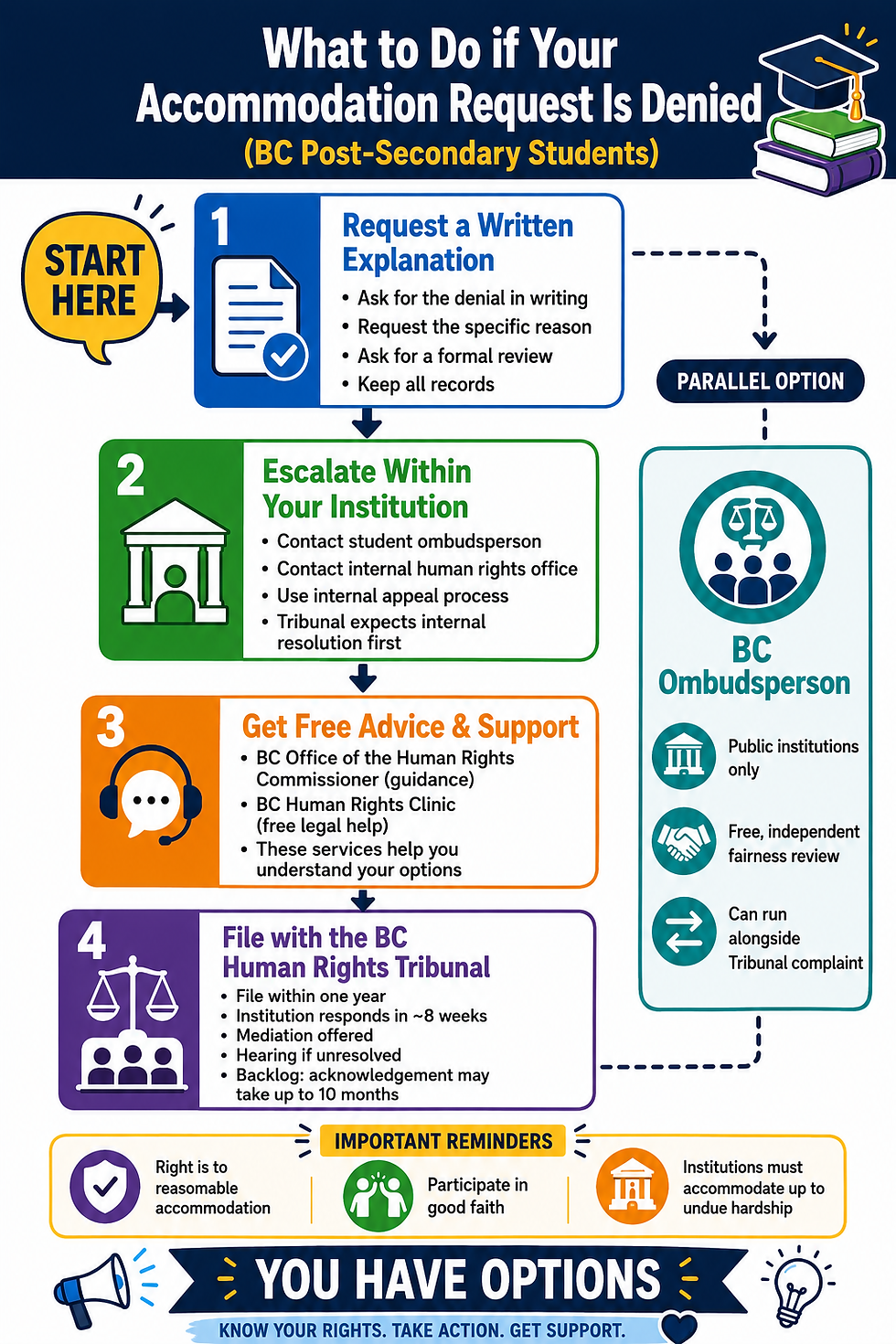
Start by Asking for a Written Explanation
A written explanation gives you clarity and creates a record you can refer back to. You can gently ask your accessibility office to:
Provide the denial in writing
Explain the specific reason for the decision
Review the decision formally
Keeping copies of emails, meeting notes, and documents can help you stay organized and supported throughout the process.
Explore Options Within Your Institution
Most BC post‑secondary institutions have internal pathways for reviewing or appealing accommodation decisions. You may be able to connect with:
A student ombudsperson
An internal human rights or equity office
A formal appeal or review committee
These internal steps matter. The BC Human Rights Tribunal generally expects students to try resolving concerns within their institution before filing a complaint.
Reach Out for Free Advice and Support
You don’t have to navigate this alone. Two provincial resources offer guidance and, in some cases, free legal help:
BC Office of the Human Rights Commissioner helps you understand your rights
BC Human Rights Clinic offers free legal assistance for eligible complainants
These services don’t make decisions about your case, but they can help you understand your options and feel more confident about your next steps.
Consider Filing with the BC Human Rights Tribunal
If internal steps don’t resolve the issue, you may choose to file a complaint with the BC Human Rights Tribunal. Some key things to know:
You must file within one year of the denial
If accepted, your institution has about eight weeks to respond
Mediation is often offered
If mediation doesn’t resolve the issue, a hearing may be scheduled
The Tribunal is currently experiencing delays, and acknowledgement may take several months
A Parallel Option: BC Ombudsperson
If you attend a public post‑secondary institution, the BC Ombudsperson can review concerns about administrative fairness. This process is:
Free
Independent
Able to run alongside a Tribunal complaint
You can learn more about the BC Ombudsperson.
Important Principles to Keep in Mind
As you move through this process, three ideas may help you stay grounded:
Reasonable accommodation You have the right to accommodations that reasonably support your learning needs.
Good‑faith participation Both you and your institution share responsibility for engaging in the process respectfully and openly.
Undue hardship Institutions must accommodate up to the point where doing so becomes an undue hardship.
These principles shape how decisions are made and how conversations unfold.


Comments